

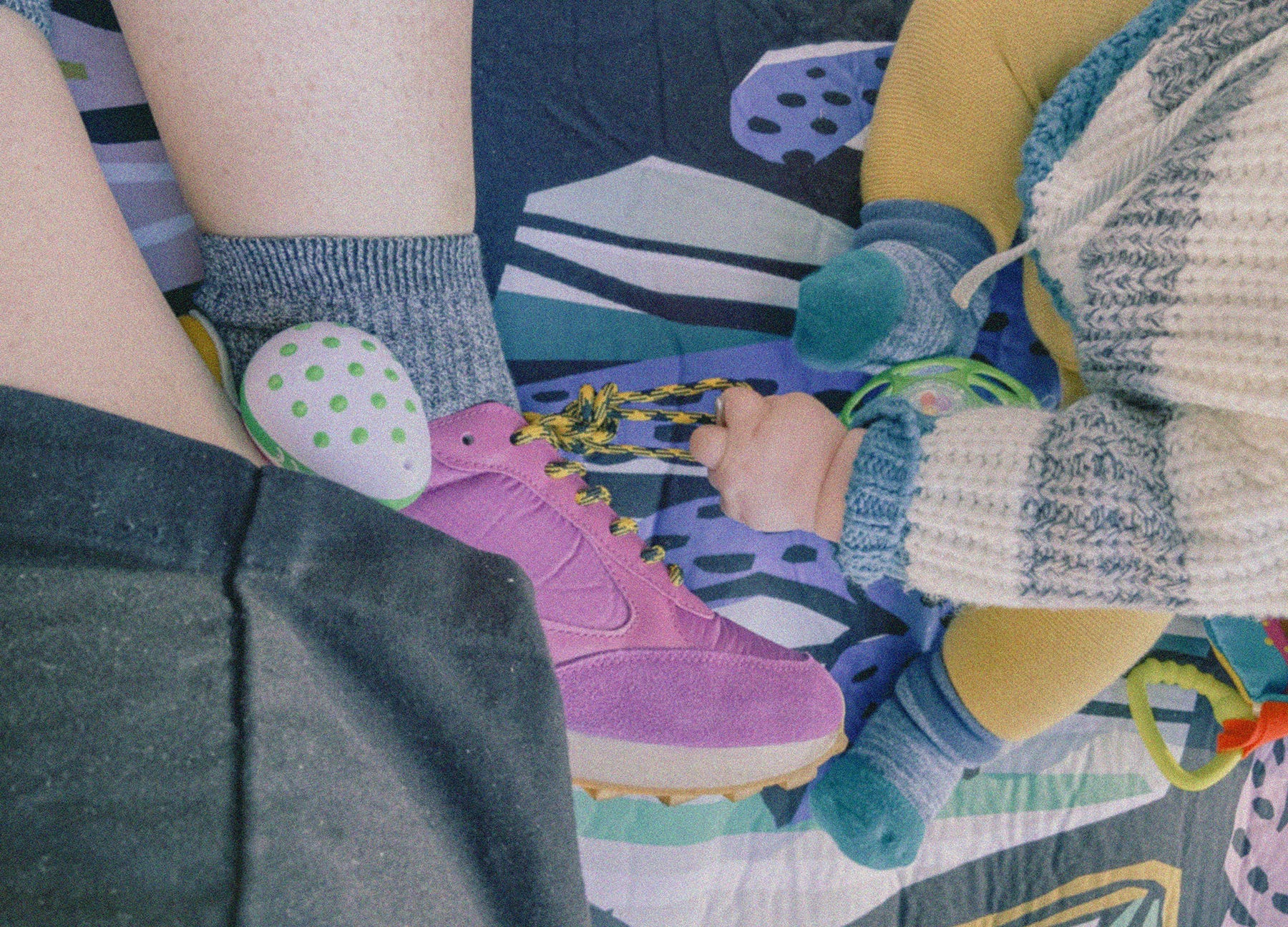
When I was pregnant with my first baby, I spent a lot of time thinking about and researching all the things we would need. A friend passed on a categorised spreadsheet and I worked my way through it, item by item, picking up what I could second hand, investing in some things ourselves and adding the rest to a wish list for friends and family.
My partner painted a chest of second hand drawers. I categorised the tiny little clothes, burp cloths and sleeping bags. Although most of the things we purchased or were given were very useful (except for the tiny baby mittens that we never once used and the nose picker someone told me I’d need), what I later realised was that no product was going to make the explosion into motherhood any less traumatic.

A high school friend who I hadn’t seen much of in my twenties became pregnant three months before me. We restarted our friendship over the shared experience of pregnancy. Having her three months ahead of me through every part of pregnancy, birth and new motherhood turned out to be the best gift I was given. When I woke up the day after giving birth to my baby and realised I hadn’t read a single thing about taking care of a newborn, she recommended a book. I downloaded it to my Kindle and finished it in two days. When our baby was struggling with gas, she sent me videos with techniques that had helped her bub. When my baby’s sleep went to crap, she was there. Giving gentle suggestions of things I could try, but also just offering support and compassion. She was someone I could text in the wee hours of the morning when I was up feeding for what felt like the hundredth time (it probably was). No question was too big, too small or too silly.
When I joined a new parents’ group, mornings in the park became my weekly salvation. A group of mums in the same boat as me. Awkwardly learning to breastfeed while sitting cross legged in the park, madly walking or rocking our babies to sleep when they emerged from the sleepy newborn phase. A group chat where we could share all our questions and doubts. A safe place to say, “This is hard.” “I don’t know if I’m doing this right.” On rough afternoons when I’d not managed to take a shower and the baby just needed everything I had, I’d have a friend to walk with, drink tea with or sit in the park with.

Just over three years later, I’ve had my second daughter. This time I feel a lot more confident in what I’m doing. It’s felt less like an explosion and more like a planned crashed landing. There is less Googling and more trust in the process. I have more friends with babies and young kids. I have community around me. Friends to call, text, empathise with and complain to.
A close friend from university just had her first baby, and although I made her a care package of tasty snacks to grab during night feeds, a night light and some books to start the baby’s library, I knew that the best thing I could do for her was just be there. To be that friend I had who was three months ahead of me that I could lean on. To offer advice when asked, to offer compassion when those early days feel impossibly hard and to research the new concepts that have become part of her early motherhood that weren’t part of mine. To lend her my brain when hers still feels foggy and too slow.
And what hasn’t been a surprise, but has been exactly what I needed, is that we’ve become closer. Because that’s what vulnerability does. It brings us closer together.

I’ve been thinking about all of this lately because I saw a post in a mums’ group that shocked me. It asked how many people were using AI for parenting advice. So many people answered to say they were. This wasn’t something people were doing when I had my first baby, which shows how quickly AI has become the norm. And because I’m feeling much more confident this time around, there has been less Googling. It didn’t even occur to me to ask AI for advice. And I’m not judging people who do. I find it incredibly helpful for lots of everyday tasks.
I’m sure ChatGPT can give great advice about nap schedules and starting solids. But can it really stand beside you and say, “I know how you feel. This is hard. You will survive”? And if it did, would you believe it? Knowing that it’s a robot that has never held a little being that it grew in its own body, looked down in awe when the baby was put on their chest and just sobbed with relief that birth was over and the baby was here. A bot that has never been tired to the core, struggling with breastfeeding or suddenly felt like a stranger in your relationship.

What I’ve learned from being both the giver and the receiver of this support is that both experiences bring you closer to another human. When our babies became toddlers, I told my longtime friend, who I no longer needed to text ten times a day, that I couldn’t have done it without her. We both cried with love and relief for the time we had gotten through together. A few weeks after my university friend had her baby, she said, “I’m sorry I wasn’t there for you as much as I could have been. I didn’t realise how hard it was.” And once again I cried and felt closer to another human.
I know it’s hard to be vulnerable. To say, “This is hard.” “I don’t know what I’m doing.” “I feel like I’m failing.” “I’m not sure if I like this.” “I’m not sure I was supposed to be a mum.” But what are we missing out on by asking AI these questions instead of other people?
True vulnerability invites connection. Sometimes simply saying the hard thing gives someone else permission to say it too.
This is beautiful. I was afraid that having supportive friends in the trenches of motherhood was a thing of the past. I’m a grandmother now, and I still remember the overwhelm I felt with my new baby, 500 miles away from my mother, and how the new mom’s group at the county extension office helped get me through his first year of life. I hear so much about how critical young moms are of each other, but I loved hearing about your connections and your community.